

Most startups that ask us for a mobile app should first fix their mobile website. We are an app studio, so that is not the advice that pays us. It is the advice that saves a founder $12k to $20k, and it is usually right.
The short answer from Eightinity Technologies: build a native app only when the core job needs the phone itself, such as the camera, the microphone, or on-device AI, or when your users will come back weekly and want an icon and notifications. If neither is true, a fast, well-made mobile website does the job for a fraction of the cost.
Why is “we need an app” usually the wrong first sentence?
Because it names a format, not a problem. A founder says “we need an app” when they mean customers are not finding the product, not coming back, or not trusting it. An app fixes none of those by itself. It adds an App Store listing, a review process, two release channels, and a bill that never stops.
Apple also expects an app to earn its place. Its App Review Guidelines (guideline 4.2) say an app should include features, content, and UI that elevate it beyond a repackaged website. A thin wrapper around your site is the fastest route to a rejection.
An app is not a bigger website. It is a promise that the phone itself makes the product better.
Which three tests decide between an app and a mobile website?
We run every “should we build an app” conversation through three tests. They take ten minutes, and they work for any category.
- Device. Does the core job need the camera, microphone, or on-device AI?
- Habit. Will people use it weekly or daily, and want an icon and notifications?
- Substance. Would the app be clearly more than your website in a frame?
One yes is enough to justify an app, scoped to that one job. Three noes mean the money belongs in the mobile website.

What does passing the device test look like?
It looks like KIN and IngrediCheck, two products we built for FungeeLLC. KIN is a voice-first family calendar on iOS 18 and later that turns a spoken sentence or a photo of a flyer into a calendar event. IngrediCheck is an iOS scanner that reads a barcode or ingredient label and checks it against a family's dietary needs and allergies.
Both are built around hardware. A browser tab can ask for the camera, but the product stops being fast, offline-friendly, and private in the way those users expect. When the phone is the product, the app is the product.
Compare that with a pricing page, a booking form, or a dashboard people check monthly. Those pass no hardware test, and an app adds friction to them. Nobody installs something to look at a quote once a quarter.
What can a mobile website do, and where does it stop?
More than most founders assume. A responsive site can take payments, handle logins, and send notifications once a visitor adds it to their Home Screen. Apple documents web push for Home Screen web apps on iOS and iPadOS 16.4 and later. Few customers will go through those steps, but the capability exists.
Here is how the two compare for a first release:
| Question | Mobile website | Native app |
|---|---|---|
| Getting found | Search engines and links bring visitors in. | App Store search and your own marketing. Nobody stumbles in. |
| Getting started | One tap on a link. No install. | Find, download, open, sign in. |
| Release speed | Ship when ready. | Apple review on every update, plus TestFlight for testing. |
| Camera, microphone, on-device AI | Limited and slower. | Full access through the platform. |
| Re-engagement | Email, plus push only for Home Screen web apps. | An icon and push notifications by default. |
| Typical first-release cost | A focused site build. | $12k to $20k for a single-platform MVP, in our cost breakdown. |
| Best for | Content, quotes, bookings, occasional-use tools. | Hardware-driven or daily-habit products. |
What if you already have a web product?
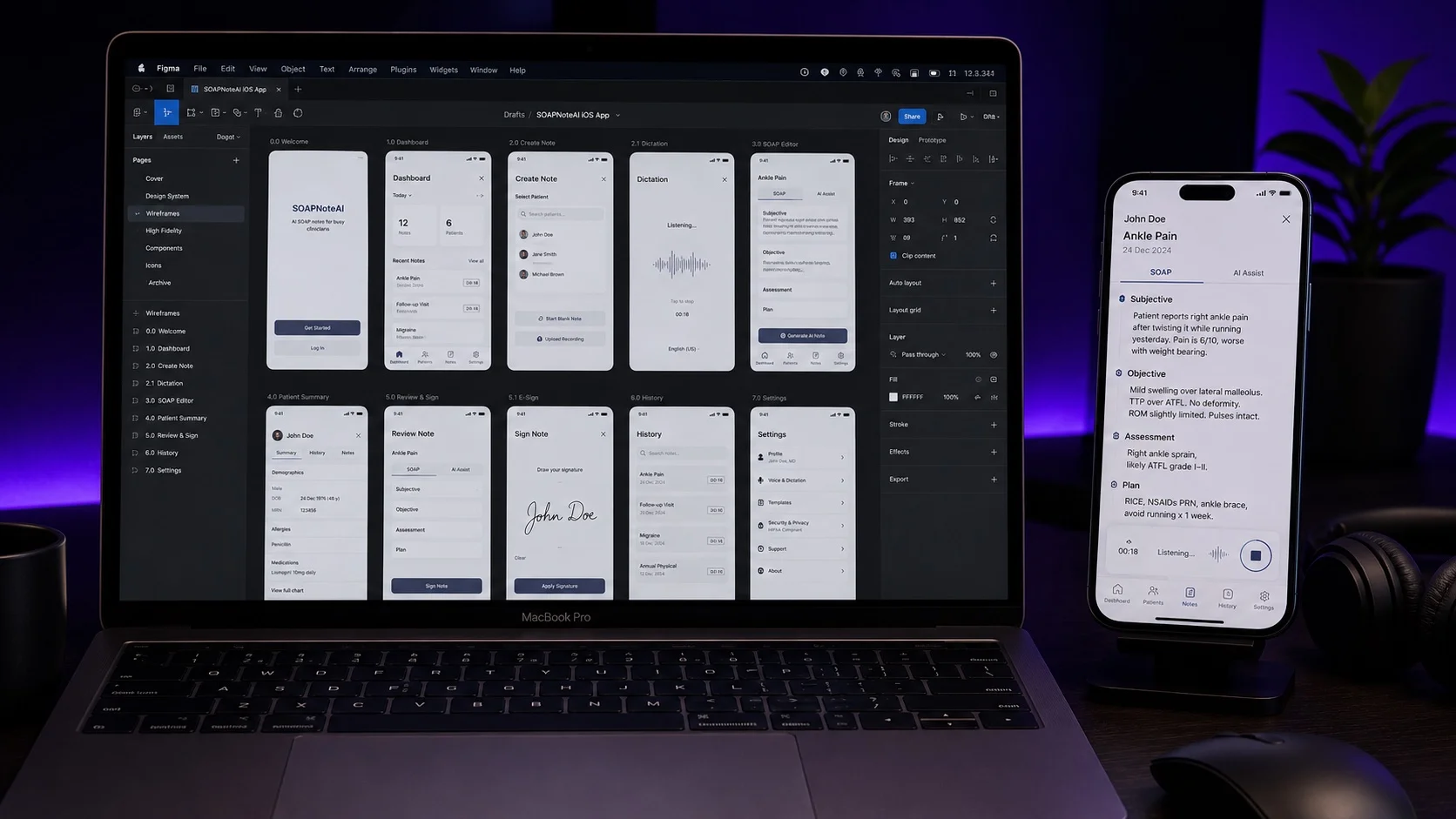
This is where founders get the most wrong, in both directions. SOAPNoteAI was already live on the web when its founder came to us, and the web product worked. The reason to go native was a clinician's workflow, recording and reviewing notes on a phone between patients. That passed the device and habit tests, so we built the iOS app.
It was not a quick wrap. The app had to consume the existing web services, and login through OIDC took many iterations to work end to end on a device. We cover it in the SOAPNoteAI web-to-iOS case study. The lesson for anyone with a web product is that the web code does not carry over for free. What carries over is the backend, if it is clean.
When is the website the better bet?
The strongest argument for an app is that apps feel more real to investors and customers. We take that seriously, and it is sometimes true for consumer products. But a polished app that nobody opens reads worse than a sharp website that converts. Evidence of use beats a store listing.
A website is usually the better first move when:
- Visitors arrive from search, ads, or links and need to act in one session.
- The product is used monthly or less, such as quotes, bookings, or account lookups.
- You have not yet proven that people want the product at all.
- The budget is tight enough that an app would consume all of it.
If you are in that group, a good mobile site also becomes the cheapest way to learn what an app should contain later. Our guide on what version one of an app should include picks up from there, and the native vs hybrid decision comes after that.
What should you do this week?
- Write the one job the product does, in a single sentence.
- Run the three tests against that sentence and write down the answers.
- If all three are no, open your site on a phone and fix the slowest page.
- If any is yes, scope the app to that one job and leave everything else on the web.
The trade-off we accept is that this advice sometimes costs us a project. We would rather be the studio that told you to wait than the one that built something you did not need.
FAQ
Do I need a mobile app or is a mobile website enough?
A mobile website is enough when visitors arrive from search or links, use the product occasionally, and need nothing from the phone's hardware. Build an app when the core job uses the camera, microphone, or on-device AI, or when users return weekly and want notifications. One yes to those tests justifies an app.
Will Apple reject an app that is just a website?
It can. Apple's App Review Guidelines, section 4.2, say an app should include features, content, and UI that elevate it beyond a repackaged website. An app that only wraps your site in a frame risks rejection, so give it a real native feature before you submit.
How much does a mobile app cost compared to a mobile website?
A focused single-platform iOS MVP typically runs $12k to $20k at Eightinity Technologies, while serious product builds with design, integration, and QA run $30k to $50k. A mobile website improvement is usually a fraction of that, because there is no store review, second platform, or release pipeline.
Should I build an app if I already have a web product?
Only if the phone adds something the web cannot. SOAPNoteAI had a working web product and went native because clinicians record and review notes on a phone. The web backend carried over, but login and the interface still needed real native work, so budget for more than a wrapper.
Unsure whether your idea needs an app yet? Bring your one-sentence product to a free 30-min call and we'll run the three tests with you →


