

Build iOS first. Not because iPhones are better, but because a first release exists to teach you something, and one platform teaches it faster and cheaper than two.
The short answer from Eightinity Technologies: launch on iOS unless your first users are mostly outside the US, your core feature needs Android-only capability, or your first buyer runs Android devices. Any one of those flips the answer. If none apply, a single iOS build is the lowest-risk way to find out whether the product works.
Why does iOS first win for most startups?
Because the goal of version one is evidence, not coverage. You want to learn whether people use the product, pay for it, and come back. Every extra platform adds a second review process, a second device matrix, and a second set of bugs before you have learned anything from the first.
Money follows the same pattern. Appfigures' analysis of App Store and Google Play revenue shows the App Store out-earning Google Play in consumer spending, even though Android has more users worldwide. For a subscription or paid product, the platform with the higher-spending audience is the better place to test pricing.
Version one is a learning budget. Spend it on one platform and learn twice as fast.
What is the strongest argument for starting on Android?
Reach, and it is a good argument. Android has the larger global base, and in some markets it is overwhelming. Here is the picture from StatCounter's mobile traffic data:

If your first 1,000 users sit in Europe or the Gulf, the chart says Android. We take that seriously. A founder selling to UAE consumers who ships iOS-only is leaving most of the phones on the table.
We still lean iOS when the audience is mixed, for one reason. Reach only helps once the product works. Most early apps do not have a reach problem. They have a retention problem, and you can diagnose that on any platform.
What does each launch strategy actually cost and take?
These are the ranges we have already published in our native Android cost breakdown and our general app cost guide:
| Strategy | Typical cost | Typical timeline | Main risk |
|---|---|---|---|
| iOS first | $12k to $20k for a focused MVP | One build, one review process | Missing Android-heavy markets |
| Android first | $12k to $20k, often 15% to 25% above the matching iOS quote | 6 to 9 weeks for a focused MVP | Device matrix and Play Billing complexity |
| Both at once, native | Two builds plus coordination | Rarely under 16 weeks | Budget goes to parity, not learning |
| Both at once, shared codebase | Cheaper than two native builds when platform APIs are light | Depends on scope | Weak fit if the core feature is platform-specific |
The last two rows are where founders often over-spend. If you do need both platforms from day one, read our native vs hybrid decision guide before you accept a quote for two native apps.
Which three questions decide the platform?
We ask the same three questions on every scoping call. They take a few minutes, and they override our own iOS default.
- Market. Will most of your first 1,000 users be outside the US, in Europe or the UAE?
- Feature. Does the core job depend on a capability only Android offers, or on a specific device?
- Buyer. Does your first paying customer or pilot run Android devices?

Question three is the one founders skip. A B2B pilot with a field team, a warehouse, or a clinic fleet can run on issued Android devices, and no amount of App Store logic changes that. Ask the customer before you ask the market.
What does iOS-first look like on a real product?
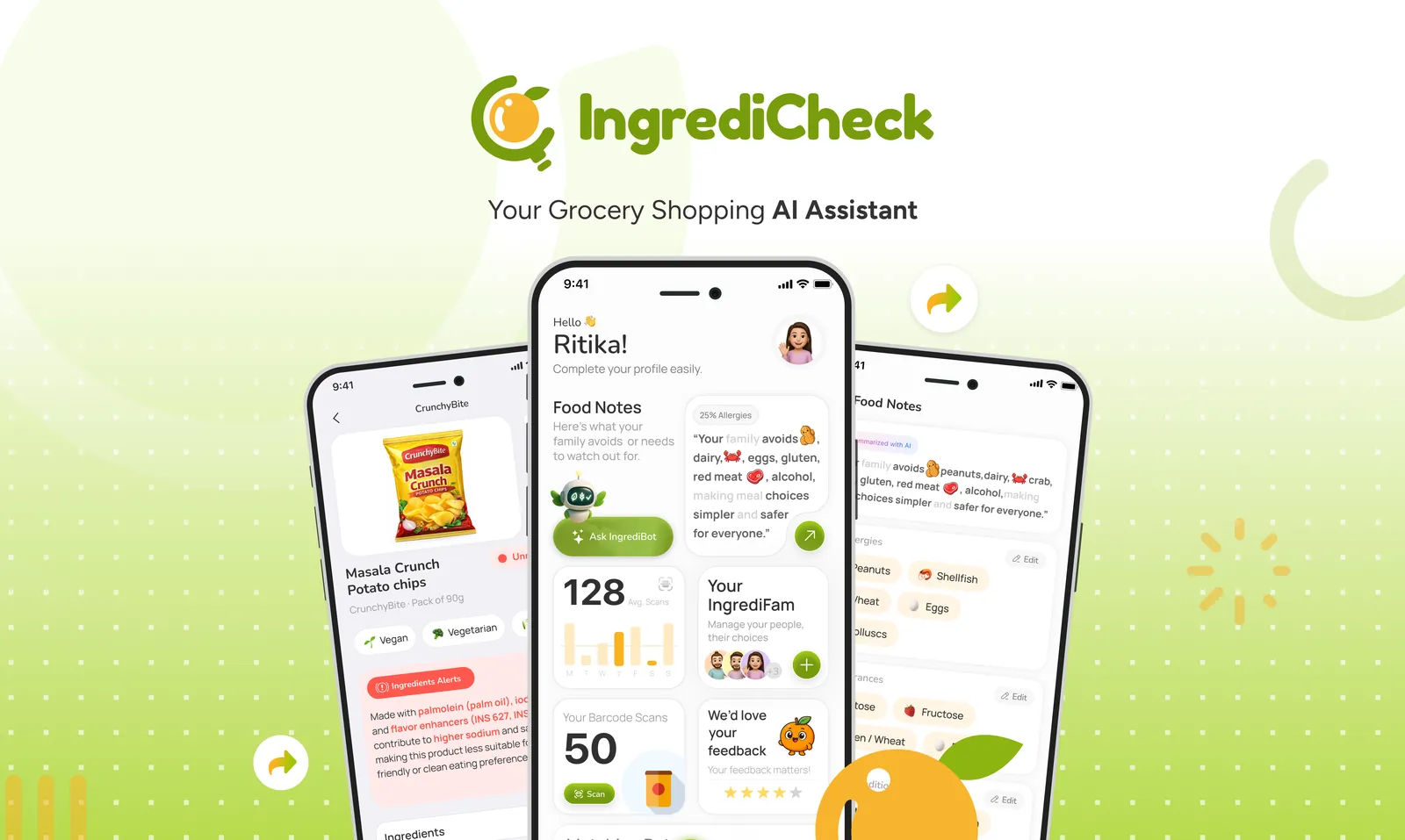
IngrediCheck and KIN are both iOS products we built for FungeeLLC. IngrediCheck scans a barcode or ingredient label and checks it against a family's dietary needs and allergies. KIN is a voice-first family calendar for iOS 18 and later, with photo-to-event AI parsing.
Both lean on the phone itself, the camera for one and voice and photos for the other. A single, focused iOS release let each product put that experience in front of users without carrying a second platform's overhead.
SOAPNoteAI followed the same logic. The founder had a working web product and asked us for a full iOS app, and the platform choice was the least complicated part. The hard part was consuming the existing web services and getting login through OIDC working natively, which we cover in the SOAPNoteAI web-to-iOS case study.
How do you keep the Android door open while shipping iOS first?
Starting on iOS does not mean rebuilding everything later. Most of the cost of a second platform sits in the backend and the product decisions, and both carry over if you set them up with Android in mind. The mistake is putting logic inside the app that a second app would then have to copy.
- Keep business rules on the server. Pricing, permissions, and entitlements belong behind your API, so an Android app asks the same questions.
- Write the API for two clients. Clean, versioned endpoints are the thing that carried over on SOAPNoteAI. Messy ones are what made login the hardest part.
- Own your accounts from day one. Your Apple and Google developer accounts should sit under your company, as we explain in who should own your Apple Developer account.
- Track where users come from. If Android-heavy regions start showing up in your web traffic or waitlist, that is your signal to scope the second platform.
Done this way, the second platform becomes a scoped project with a known backend, not a restart. That is also easier to quote and easier to budget for, because the unknowns have already been paid for once.
When should you not build iOS first?
Three situations, matching the three questions above. Each has a clear signal, so you should not need to guess.
- Your waitlist, ad data, or pilot customers show an Android-heavy audience.
- The product depends on hardware or system behaviour that Android handles better.
- Your first buyer has already told you which devices their team carries.
The trade-off with iOS first is real. You delay part of your audience, and some users will ask for Android on day one. We think that cost is smaller than the cost of splitting a first budget across two platforms before you know the product works.
FAQ
Should I build my startup app for iOS or Android first?
Build iOS first unless your early users are mostly in Android-heavy markets such as Europe or the UAE, your core feature needs Android-only capability, or your first buyer runs Android devices. A single-platform release costs less and teaches you faster whether people will use and pay for the product.
Is iOS or Android better for making money with an app?
The App Store generally out-earns Google Play in consumer spending, even though Android has more users worldwide. That makes iOS a stronger place to test pricing and subscriptions early. Revenue still depends on your audience, so check where your actual paying users are before assuming the average applies.
How much more does Android cost than iOS?
At Eightinity Technologies, an Android quote typically lands 15% to 25% above the matching iOS quote. Fragmentation across devices and API levels, Play Billing, and faster API changes drive the gap. A focused single-platform MVP on either platform starts around $12k to $20k.
Can I launch on iOS and Android at the same time?
You can, but two native builds rarely finish in under 16 weeks and split your budget across parity work. A shared codebase can reduce cost when the product does not depend on platform-specific features. If the core job is camera, voice, or on-device AI, launch on one platform first.
Not sure which platform your first 1,000 users are on? Bring your audience and your pilot customer to a free 30-min call and we'll pick the platform with you →


